Ventilation in the livestock industry
The importance of ventilation in the livestock industry
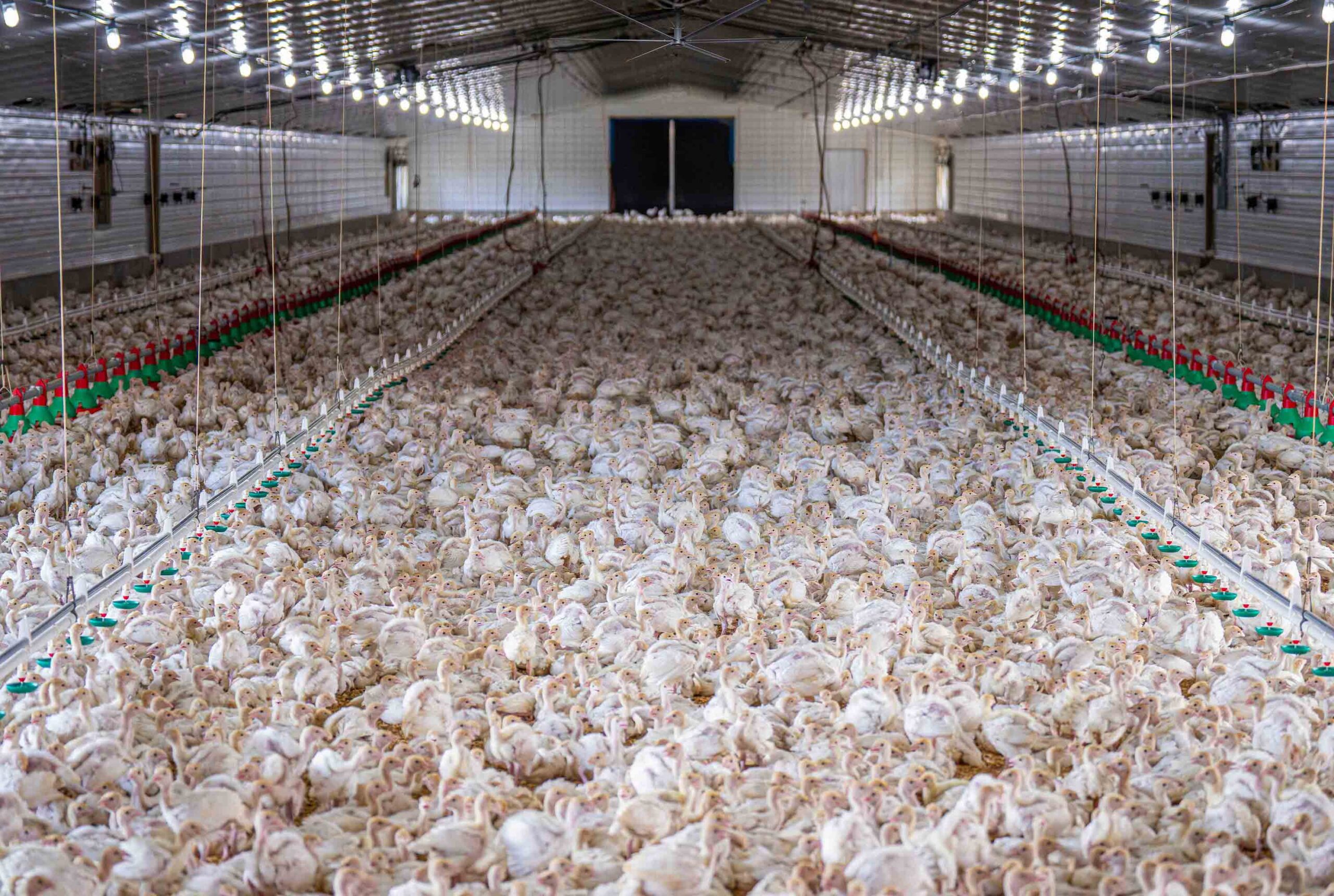
A suitable ventilation system is essential in the livestock industry. Especially for facilities that house large numbers of animals and need a controlled environment to ensure their health and productivity.
The main purpose of ventilation in livestock farming is to remove heat, excess humidity, harmful gases such as ammonia and carbon dioxide, bad odours and other harmful elements from the animals’ environment. These factors have a negative effect on animal health, causing heat stress, respiratory diseases and lower performance.
Benefits of ventilation
in the livestock industry
They provide efficient airflow, improve animal welfare and increase productivity, with low energy consumption and easy maintenance.
They maintain a comfortable environment that helps livestock rest and feed, increasing milk, meat or egg production.
They effectively disperse harmful gases and odours, improving air quality and creating a healthier environment.
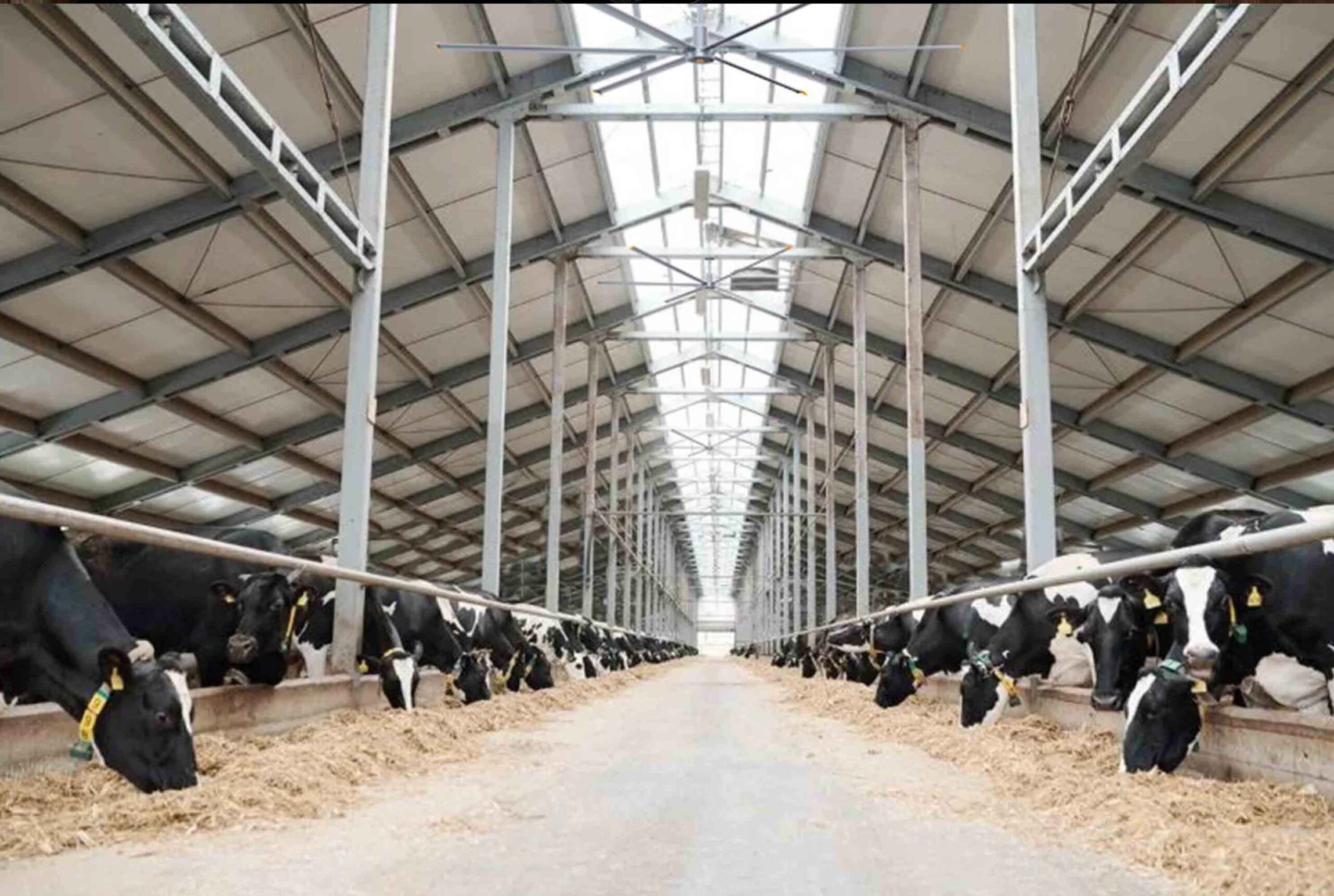
They lower the temperature by up to 6 °C, preventing heatstroke and keeping animals cool and healthy.
They improve ventilation, reduce humidity and prevent respiratory diseases.
They lower energy and maintenance costs while increasing productivity and profitability.
Production
Increase
animal production
Gas reduction
Create spaces with less heat stress and fewer harmful gases
Risk reduction
Reduce the risk of respiratory diseases in animals
Cool,
ventilated spaces
with quality air...
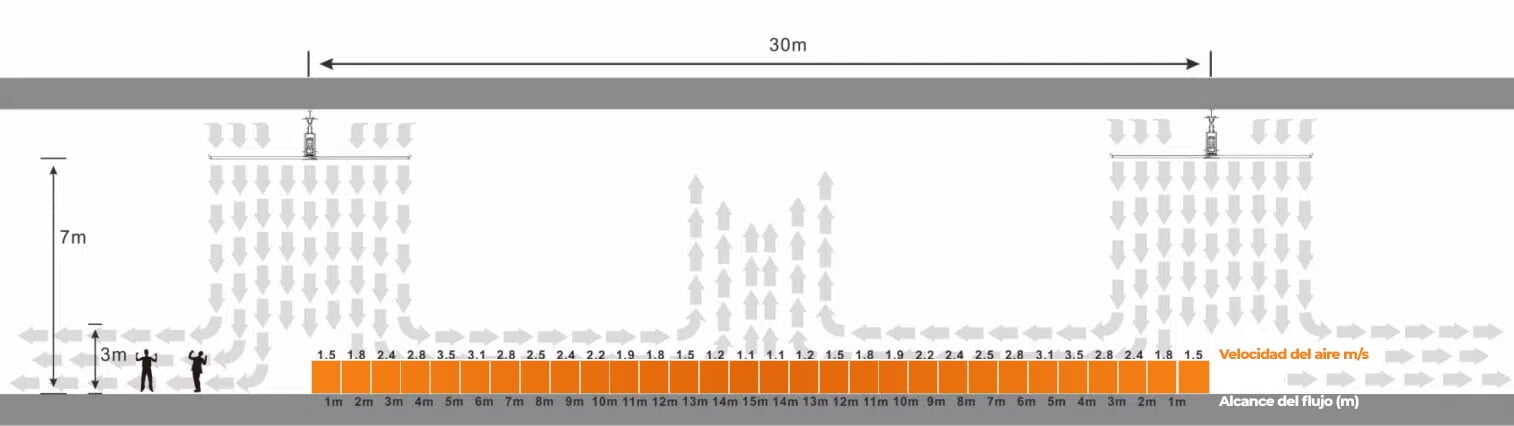
Under ideal conditions, Lfans HVLS fans can achieve temperature drops of up to 6 ºC
As the graph shows, an air current with a speed of 2.5 m/s (10 km/h) at an ambient temperature of 31 ºC produces a perceived temperature of 26.5 ºC